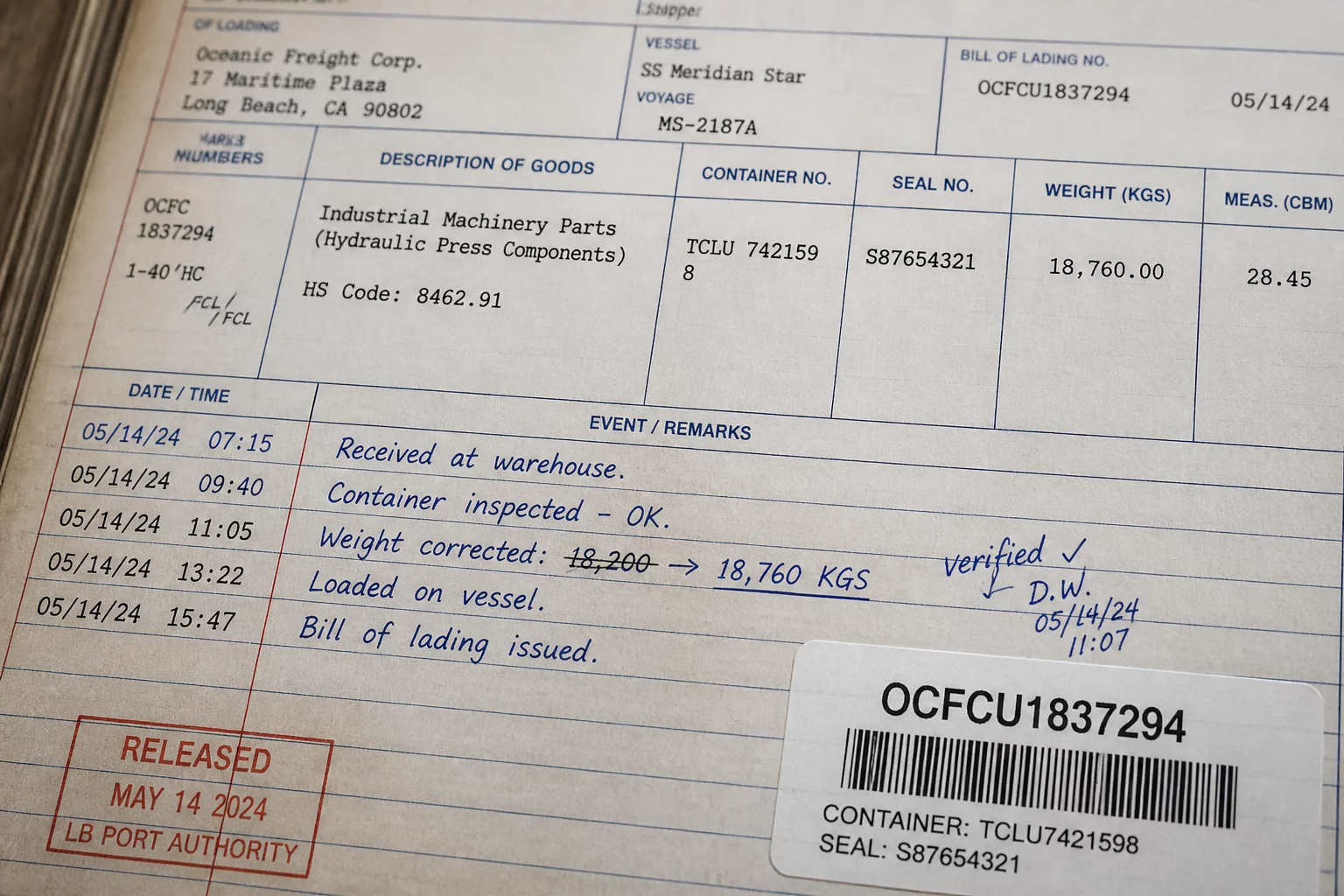
The Anatomy of Mid-Shift Shipment Adjustments
When an address suffix changes, a parcel weight is recalibrated, or a carton is re-routed mid-stride, the physical box transforms into an operational exception.
In high-throughput dispatch environments, packing line teams frequently reprint labels to rectify typos or billing code mismatches. Without an immediate ledger annotation, the initial tracking identifier lingers inside the staging database as an unsettled promise. Carrier drivers arrive for pickup expecting manifest totals that conflict directly with physical skids sitting on the loading dock.
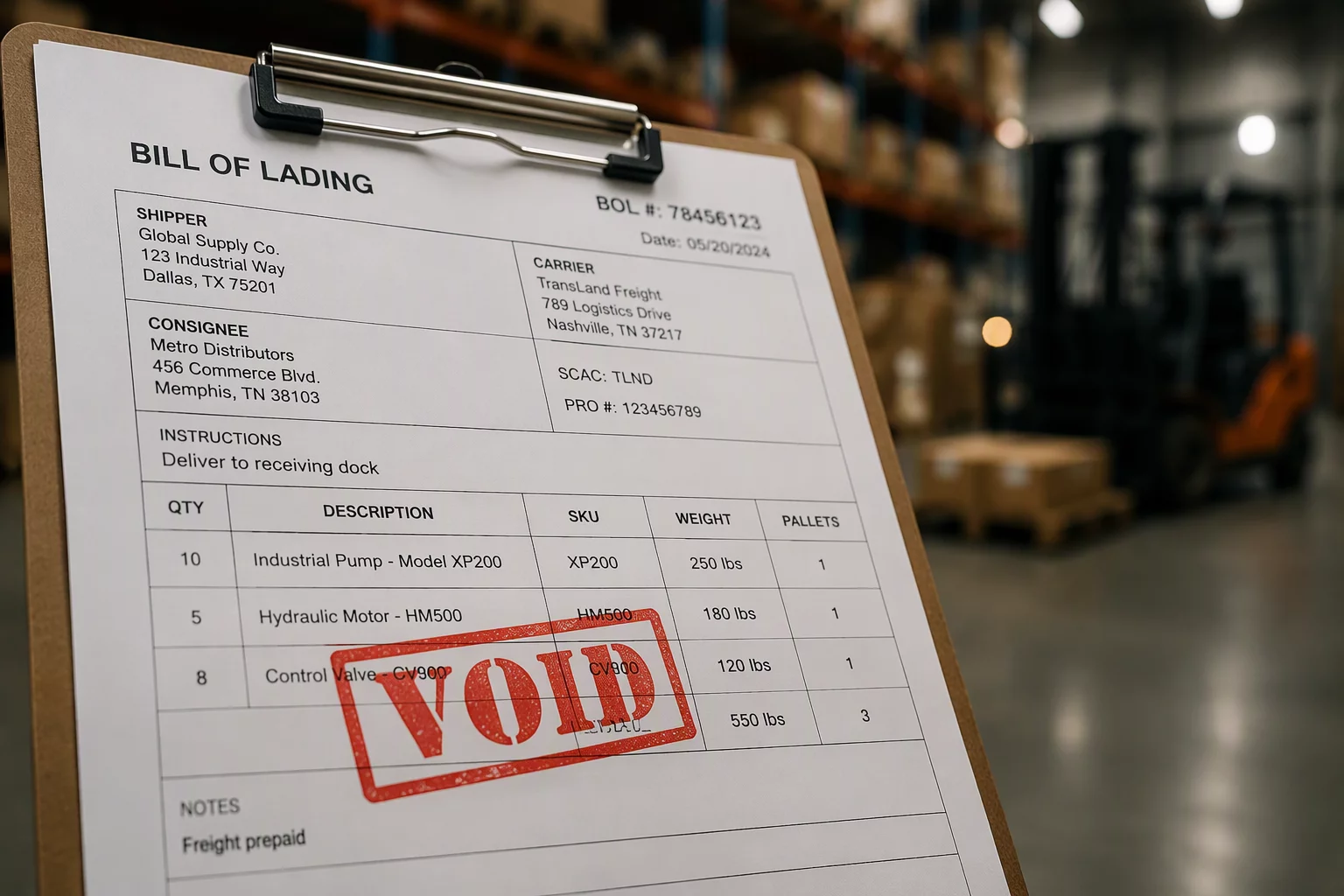
Establishing a standardized close sheet requires logging every voided barcode alongside its newly generated successor. This cross-reference prevents the ghost package syndrome, where customer support tracks an obsolete tracking number while the actual crate travels securely under a fresh airway bill.
Key Components of an Unbroken Modification Log
A reliable audit trail bridges the gap between software state and warehouse reality. Supervisors who review close sheets rely on explicit markers rather than verbal assurances during fast-paced shifts.
- Dual Tracking Correlation: Pairing the voided barcode directly with the replacement label number in both the ERP and physical clipboard ledger.
- Reason Code Documentation: Tagging adjustments with clear categories such as dimensional weight correction, customer address update, or carrier service change.
- Physical Verification Stamp: Ensuring that superseded thermal labels are physically defaced and removed before staging parcels into outgoing trailers.
When outbound teams execute these verification steps consistently, end-of-day billing reconciliations take minutes rather than hours of forensic log digging.
Closing the Loop Before the Next Shift Handover
Shift handovers often conceal the friction created by mid-day modifications. Second shift operators inheriting an unsettled queue cannot determine whether a lone carton in the exception bay awaits customer contact or a new label print.
By standardizing the Close Sheet handover protocol, every corrected parcel leaves behind an auditable trail. Morning dock supervisors can verify matching counts between terminal batch closes and physical trailer seals with complete certainty.


Shift Comments & Notes
No operational notes yet. Be the first to record a comment or reconciliation observation.
Leave a Shift Operational Note